
We use cookies to enhance your user experience. By clicking ‘Accept’, you agree to store cookies on your device. Find our Privacy Policy.
Unlimited OSCE Practice

Practise with AI-powered OSCE stations, examiner-level mark schemes, and instant feedback. No Credits. No Limits.
Plans
Select Your Plan

OSCE and MLA CPSA Bank
£39.99/annually
Get Access 450+ OSCE Stations
- Unlimited AI OSCE Text/Voice
- Full Curriculum Coverage
- Progress Tracking Dashboard
- Online Group Study Mode
- 35+ OSCE Videos
- Offline iOS/Android/iPad App
OSCE-AI in Action
Under 1s
from your last word to the patient's first
340+
AI stations across the CPSA blueprint
Calibrated
AI marking benchmarked against practicing doctors
Unlimited
attempts, no cap or cost
Unlimited
Practice until you feel ready
Every station, unlimited attempts, no credits and no queue. It's often not about what you know — it's about practicing regularly, so you build the confidence and fluency to handle whatever the station throws at you.
Take a history, get marked, spot a blind spot, and immediately try another station to drill that exact skill, ideally with a different approach each time. Spaced, deliberate practice with immediate feedback, anytime, anywhere.
Start your first station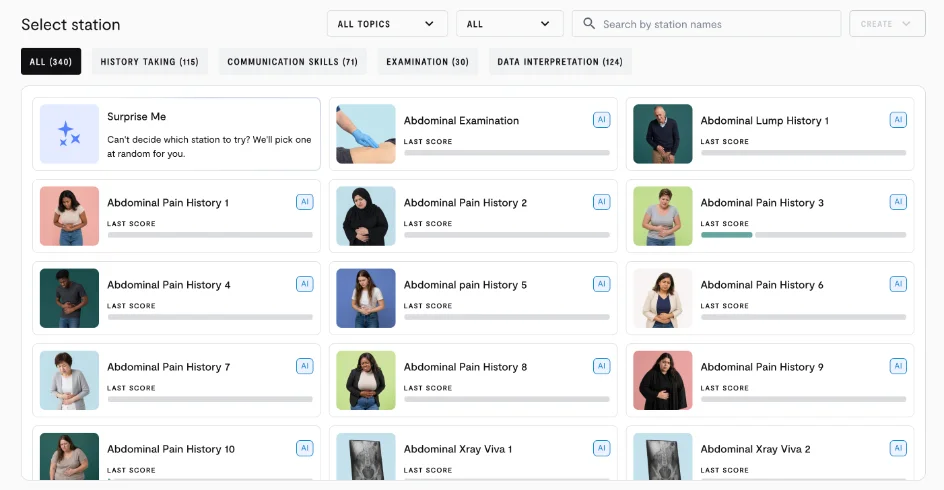
Voice
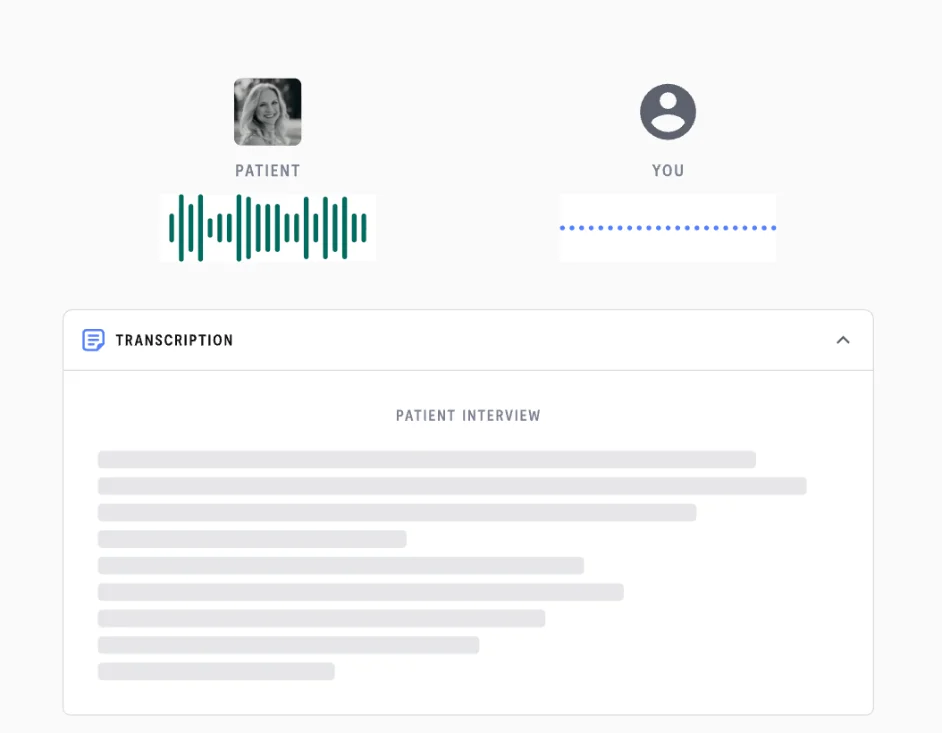
A patient, not a chatbot
The AI patient is not a chatbot reading a script. It inhabits a defined persona and uses lay language, "tummy" rather than "abdomen", with accents from across the UK and across age groups.
The voice layer adds the pauses, sighs, and tonal shifts that follow the clinical picture:
A patient in pain is clipped and circular.
Someone waiting for bad news gets quieter and apprehensive.
Someone frightened talks too fast and sounds anxious.
Real time
A conversation that flows
The patient answers in under 1 second, end-to-end. About the pause a real person leaves. Close enough that you stop noticing it and start noticing your own questioning.
Tested at under 1 second end-to-end, the fastest AI patient we have measured anywhere. It is the difference between a vague roleplay and a consultation that feels meaningfully closer to a real ward encounter.
And because real consultations are not tidy, you can steer. If the patient goes off down a tangent, step in gently and bring things back, the way you would in real life. Doing it well is part of what you are practicing.
Feedback
Every mark, explained
A session score and a global impression rating, from Fail to Excellent. The full mark scheme, criterion by criterion, showing every mark you scored and missed.
And written feedback on what worked well and what to focus on next time, drawn from the actual content of your consultation rather than generic comments.
Examiner's feedback
You established a polite and professional rapport quickly, confirming patient identity and using open questions effectively. Your clinical reasoning was focused and appropriate, correctly identifying biliary colic and requesting the right investigations. However, you missed key parts of the history - the timeline of pain onset, its character, radiation and severity - and did not provide reassurance or acknowledge the patient's concerns.
What you did well
0strengths- Introduced self and confirmed patient details
- Used open questions and minimal interruption
- Identified biliary colic as working diagnosis
- Requested appropriate blood tests including LFTs and CRP
- Gave dietary advice and referred for elective cholecystectomy
Focus on next time
0actions- Establish a clear timeline of pain onset and progression
- Explore pain character, radiation and severity
- Ask about associated symptoms - fever, urinary changes, weight loss
- Enquire about past medical, drug, family and social history
- Provide reassurance and acknowledge the patient's concerns
- Summarise and signpost to structure the consultation
Marking
Examiner-level marking you can trust
Every station is marked line by line against a detailed, station-specific mark scheme, written by our clinical team to mirror the criteria UK medical school OSCEs use. Our AI examiner reaches the same verdict as an experienced clinician as consistently as two human examiners agree with each other, validated in a blind study against practicing doctors.
Read more about how our marking works
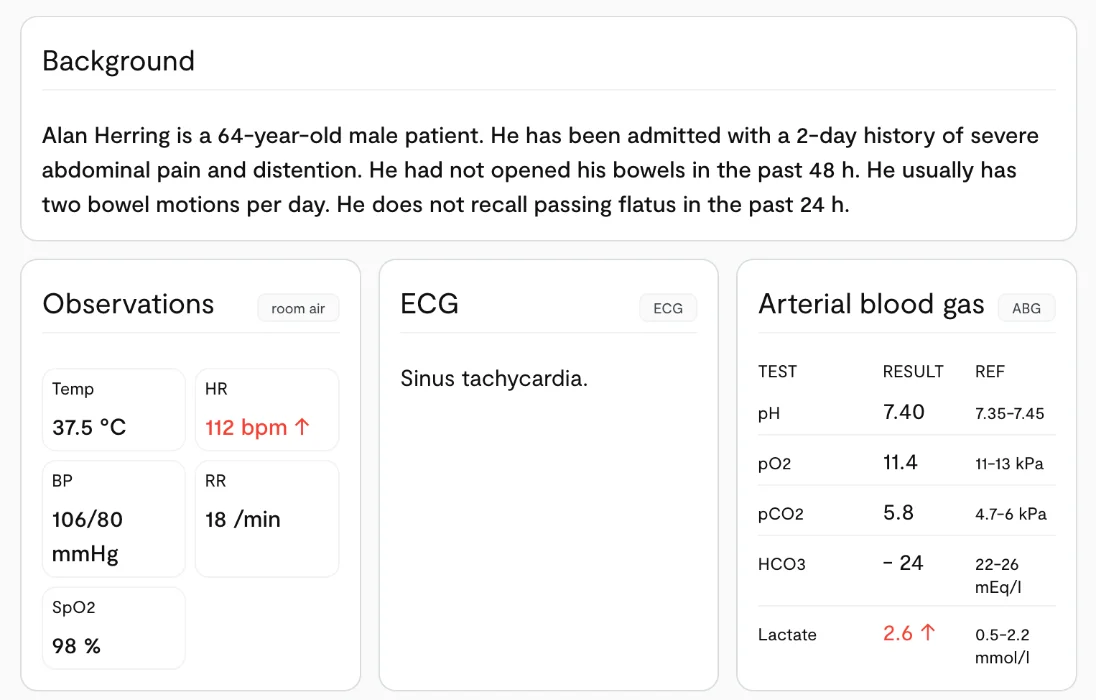
Data interpretation
Interpret clinical data, talked through in real time
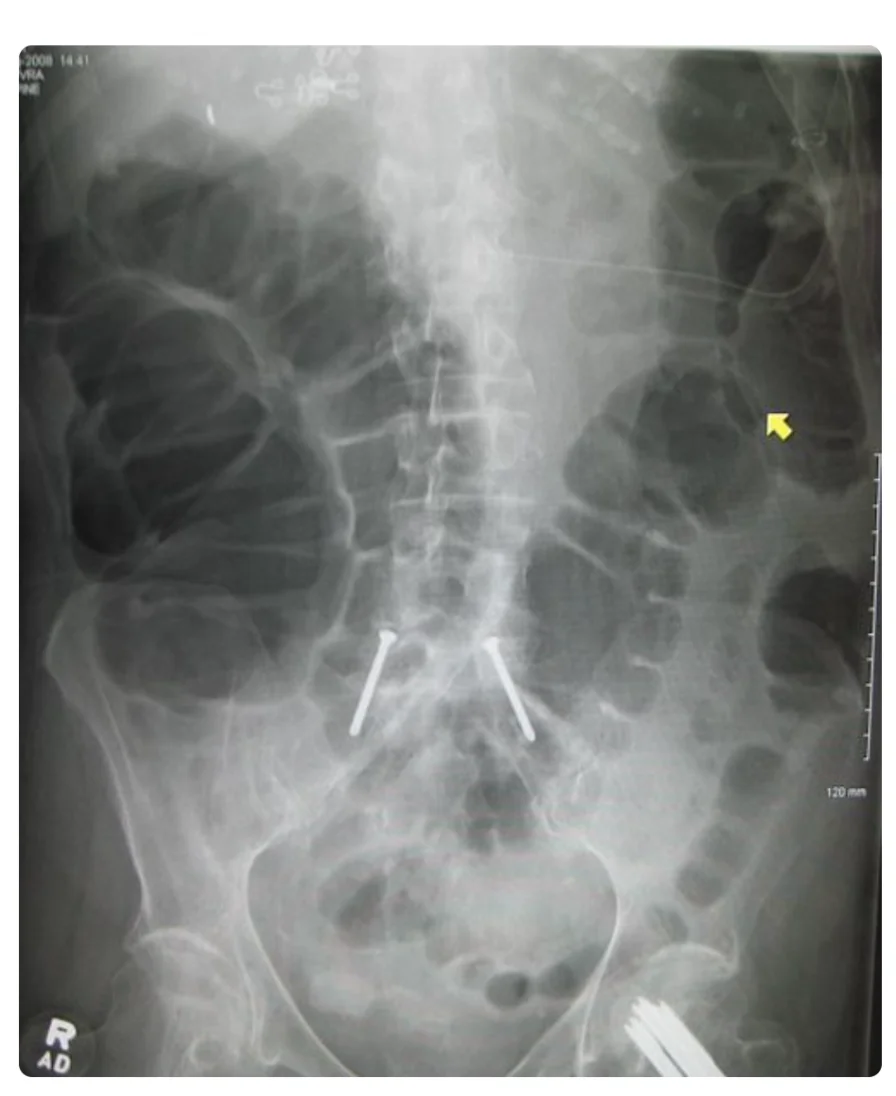
Talk an AI examiner through a chest X-ray. Present an ECG. Interpret a set of bloods and say what you would do next. Just like a real viva, you are pushed on your reasoning, not just your answer.

Testimonials
Don't just take our word for it!
Read what our users have to say about Quesmed.
Grace
🇬🇧 Medical Student

Amaya
🇬🇧 Medical Student
Eden
🇬🇧 Medical Student
Hari
🇬🇧 Medical Student
James
🇬🇧 Birmingham Medical Student
Declan
🇬🇧 Medical Student
Erika
🇬🇧 Manchester Medical Student
Amara
🇬🇧 Lancaster Medical Student
Delphine
🇬🇧 Medical Student
Gabriel
🇬🇧 Edinburgh Medical Student

FAQ
Frequently Asked Questions
OSCE-AI is Quesmed's purpose-built OSCE simulator for UK medical students preparing for finals and the MLA. It lets you practise full OSCE stations with an AI patient and an AI examiner in real time, then gives you structured, GMC-style marked feedback the moment you finish. Every History and Communication station in the Quesmed bank is included, with no booking, no waiting, and no need for a study partner.
The AI patient is not a chatbot reading a script; it inhabits a defined persona with a clinically appropriate emotional state, whether anxious, distressed, calm, or breathless, and it adjusts its tone, pace, and willingness to disclose information based on how warmly and skilfully you consult. Every station is automatically marked against a detailed, station-specific markscheme the instant you finish, with itemised strengths, areas for improvement, and a global impression rating, mirroring the structure your medical school uses. Nothing else combines this level of conversational realism with examiner-grade structured feedback at this scale.
Generic chatbots will happily roleplay a patient, but they don't know what a good OSCE consultation looks like, they break character when challenged, and they cannot mark you against a real station markscheme. OSCE-AI is built specifically for OSCE practice. The patient agent is engineered to behave like a real patient, using lay language, withholding sensitive details until properly probed, and staying in character regardless of how you push it. The marking agent grades you against the actual scoring criteria for that station. You get realism and assessment in one place, rather than a vague roleplay with no signal on whether you are improving.
Study partners are invaluable, but they are not always available, they rarely stay in character, and they cannot reliably mark you against a formal markscheme. Paid actor sessions are excellent but expensive and infrequent. Textbook scenarios are static and give you no interactive practice at all. OSCE-AI sits alongside these as the option you can use any time, on any of our 180+ stations, with consistent character work and consistent marking. It is designed to multiply your reps, not to replace peer practice or clinical placements.
The patient is given a complete clinical persona including emotional state, social history, and rules about what to volunteer versus what to disclose only when properly probed. It uses natural lay language ("tummy" rather than "abdomen"), responds to empathic communication with more openness, and stays in character through interruptions, leading questions, or social pressure. The voice layer adds pauses, sighs, and tonal shifts that match the emotional state, so an anxious patient sounds clipped and circular, while a fatigued patient sounds slower and quieter. The result is a consultation that feels meaningfully closer to a real ward encounter than scripted simulations allow.
When you finish a station, our marking agent reviews the full transcript of your consultation and compares it line by line against the station's markscheme, written by our clinical team to mirror the criteria used in UK medical school OSCEs. You receive a session score, a global impression rating (Fail, Borderline, Pass, Good, Excellent), an itemised list of marks you scored and missed, and written feedback covering strengths, weaknesses, and an overall summary. Because the feedback is grounded in the actual content of your consultation, you get specific, actionable observations rather than generic comments.
Treat each station as if it were the real exam. Read the candidate brief during the reading time provided, run the full consultation under the clock, and resist the urge to pause or restart mid-station. Afterwards, read every line of the feedback and the markscheme breakdown before moving on, paying particular attention to the marks you missed. Rotate stations across different presentations rather than drilling the same one repeatedly, and revisit weak areas a few days later to test retention. The stations you find hardest are the ones worth repeating, ideally with a different communication approach each time.
The real bottleneck for most students is not knowledge, it is the number of realistic consultations they can rehearse before exam day. AI removes that bottleneck. You can take a focused history, get marked, identify a specific blind spot such as not screening for red flags or not exploring ideas, concerns, and expectations, and immediately try another station to drill that exact skill. Spaced, deliberate practice with immediate, individualised feedback is one of the most evidence-backed approaches to skill acquisition, and AI lets us deliver it at a scale that simply was not possible before.
A typical station takes 12 to 15 minutes including reading time, the consultation, the examiner questions and feedback review. We suggest two to four stations per session, three to five times a week in the run-up to finals, mixing presentations across systems. Quality matters more than volume; one station with careful review of the feedback is worth several rushed run-throughs. In the final fortnight before your OSCE, step up to daily practice and prioritise the station types and systems where your feedback shows recurring gaps.
Your consultation transcripts are stored securely so the marking agent can grade them and so you can review past sessions on your dashboard. We do not sell user data, and conversations are not shared with third parties beyond the AI providers who process the voice and language components in order to deliver the service. You can request deletion of your session history at any time through your account settings, and full details are available in our Privacy Policy.